

Hair Loss Anxiety: Why Your Body Reacts Before You Have the Words
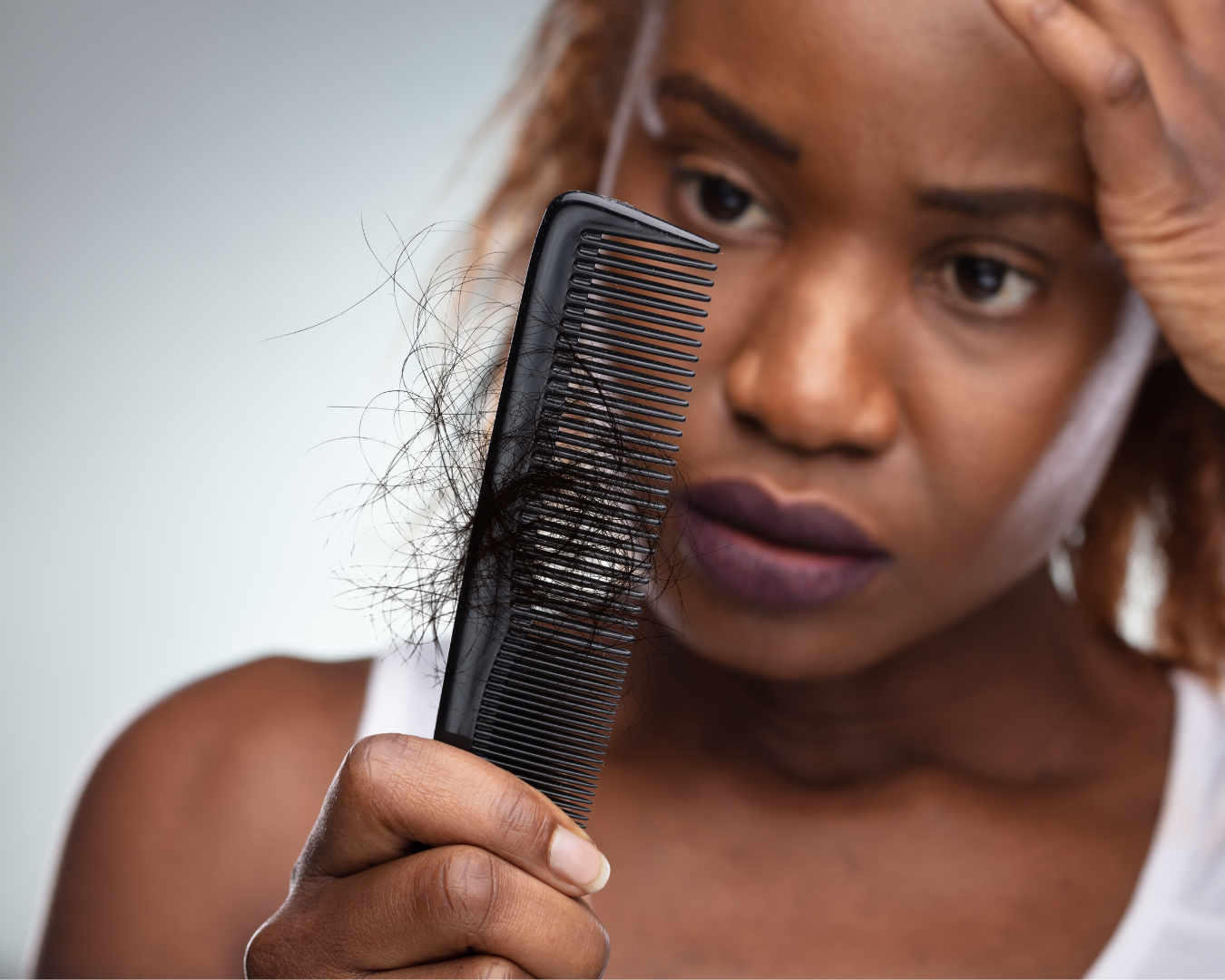
Woman holding a comb with visible hair shedding.
Hair Loss and Anxiety
The Connection No One Talks About
I want to talk about something most people don’t immediately associate with hair loss, even though it often shows up early and with surprising intensity.
Anxiety.
Not the kind you can easily attribute to work, relationships, or a stressful week. I’m talking about the body-level panic that appears when your hair starts changing, sometimes before you’ve even fully registered that it’s happening.
If you’ve ever felt your chest tighten in the shower, your stomach drop when you notice more shedding than usual, or your mood shift because the lighting in your bathroom feels unforgiving, that reaction isn’t imagined. It’s not drama. It’s your nervous system responding to a change it doesn’t yet understand.
Hair loss isn’t only physical, it’s psychological. Your body often reacts long before you have the language to explain what you’re going through.
Why Hair Loss Triggers Anxiety
When I first started losing my hair, I didn’t understand why fear seemed to follow me everywhere. Washing my hair made my heart race. Looking at photos of myself felt unsettling in a way I couldn’t explain. Getting ready for an ordinary day suddenly felt heavier than it should.
It took time to recognize what was happening underneath.
Hair loss activates the same emotional systems involved in grief, medical uncertainty, identity disruption, body image changes, and social fear. These are not surface-level concerns. They’re deeply tied to how we experience safety, continuity, and belonging in our own bodies.
Your brain doesn’t process change through logic alone. It relies on patterns. When something central to how you recognize yourself begins to shift, especially without warning or clear resolution, your nervous system moves into protection mode.
That’s why anxiety around hair loss often shows up as heightened vigilance rather than isolated worry. You become aware of every strand. You brace before social plans. You tense up under certain lights. You monitor your reflection not out of vanity, but out of fear that something else has changed without your consent.
This isn’t your body malfunctioning, it’’s responding to a perceived threat, even if that threat is emotional rather than physical.
Understanding this changed how I related to myself. I stopped treating the anxiety as something to suppress or fix and started seeing it as information. Once I did that, the shame eased. Not all at once, but enough to create space.
What Hair Loss Anxiety Actually Feels Like
Over the years, through conversations, messages, and meet-ups I’ve hosted through Hair Loss Bonita, I’ve noticed how consistent these experiences are once women stop minimizing what they are feeling.
Hair loss anxiety rarely announces itself all at once. Instead, it builds gradually, then intensifies, then becomes hard to ignore.
It shows up as standing in the shower, watching more hair collect in your hands than your emotions can keep up with. As the physical discomfort of noticing more scalp than before. As avoiding photos because you know you’ll analyze them later. As scanning mirrors instinctively, because you’re trying to regain a sense of control.
It can make dates feel heavier, hugs feel exposing, and videos of yourself feel unbearable to rewatch. Know that this has nothing to do with being insecure, it is your sense of familiarity has been disrupted.
What I wish I had understood earlier in my hair loss journey is that these reactions aren’t shallow concerns. They’re identity-level responses. Hair is tied to how we see ourselves, how we expect to be seen, and how safe we feel moving through the world. When that shifts, anxiety is a predictable response.
Reducing Hair Loss Anxiety Without Minimizing the Experience
I’m not interested in pretending this is easy or offering solutions that gloss over the emotional weight of what’s happening. But once I understood what my body was reacting to, a few things genuinely helped reduce the intensity.
Not by eliminating anxiety, but by lowering the overall load.
Before checking my hair, I learned to slow my breathing enough to interrupt panic before it spread. Naming only the moment I was in, rather than projecting into the future, made the experience feel more contained. Managing my environment, especially lighting that reliably triggered spirals.
Giving myself options also mattered. Wigs, toppers, hats, or choosing not to engage with my hair on certain days weren’t about hiding. They created flexibility which communicated to my nervous system that I wasn’t trapped.
Most importantly, I paid attention to how I spoke to myself when anxiety surfaced. Not with forced positivity, but with grounded, neutral truth. The kind your body can actually register.
What Shifted Over Time
The biggest change didn’t come from eliminating fear, but from no longer fighting it. Once I stopped trying to be strong all the time and allowed myself to acknowledge what this was actually touching, something shifted. I stopped waking up braced for impact, stopped interpreting panic as failure, and stopped pretending that hair loss wasn’t influencing my daily life.
Over time, my body learned that it wasn’t in immediate danger. That didn’t make everything easy, but it did mean the anxiety no longer ran the entire system.
If you’re experiencing this kind of response, it doesn’t mean something is wrong with you. It means you’re navigating a change that affects how you recognize yourself, and that isn’t a small thing. Your reaction deserves to be taken seriously.
You don’t need to be fearless, okay all the time, or rushed toward acceptance. You need language, understanding, and support that acknowledges the reality of what you’re carrying.
That’s why I’m writing this here.
With mucho amor and gratitude,
YoMo
